
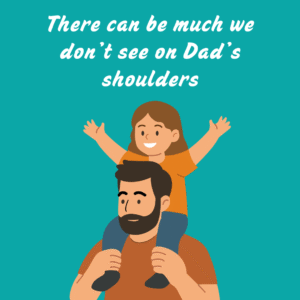
Becoming a father is a huge life transition. Often painted as a time of great joy and fulfillment, this period is also marked by the challenges of sleep disruption, altered routines, relationship changes, identity shifts, financial strain, and worries about both infant and partner well-being. Many new fathers suffer in silence through these challenges, with as many as 1 in 10 new fathers experiencing perinatal depression. This is defined as depression occurring anytime during the pregnancy and within the first year of having a baby. While this can affect anyone going through the transition to fatherhood, men are at increased risk if they have a personal history of depression or anxiety, if there was a previous pregnancy loss, high risk pregnancy or traumatic delivery, and if their partner is experiencing perinatal depression.
The challenges on new fathers are often exacerbated by societal pressure. The idealized image of the strong father, protecting and providing for his family, can weigh heavily on men. Many men feel they cannot share the struggles they are experiencing, increasing the sense of shame and isolation. Since men are often taught to suppress emotions, depression in men tends to present differently than in women. Research shows they are more likely to disengage at home and at work. They are more likely to express anger than sadness, and may engage in unhealthy behaviours, such as drinking or substance use to cope with depression. Untreated mental health problems in fathers can have significant impacts on individual and family health, as well as on child development. In other words, fathers make a difference in their children’s lives. When fathers are mentally healthy, they are more likely to form strong bonds with their children, engage in positive parenting, and foster a stable environment for their children to grow and thrive.
In June, we acknowledge fathers through the well-celebrated tradition of Father’s Day. More recently, the issue of paternal health is gaining some momentum through the lesser- known International Father’s Mental Health Day on June 16 this year (the Monday after Father’s Day). It’s time to break the stigma around paternal mental health so fathers can access the support they need. We can start by normalizing conversations around paternal mental health, by asking new dads how they are doing, by listening with compassion, and by encouraging dads to prioritize their own mental health. If you are a new or expecting father, here are some tips to help you in this transition:
Maintain healthy routines: Build healthy, stress-reducing routines into your new day-to-day schedule. This can include healthy eating, hydration, regular exercise, meditation and/or a regular mindfulness practice.
Maximize sleep and rest: This includes lowering expectations about what needs to get done in the early weeks and months postpartum. It can be helpful to discuss sleep strategies with your partner to ensure you are both getting as much sleep as you can by sharing the night care, spelling each other off for feedings and diaper changes. Some couples split the night with one person taking the earlier part of the night (i.e. 10pm-3am) and the other taking the late night/early morning shift (i.e. 3-8am), with adjustments to fit the needs of your family.
Spend some 1-on-1 time with your baby: Spending uninterrupted time with your baby each day can help you develop your own unique bond with your baby, help you to feel more connected in the family, reduce feelings of displacement, and contribute to overall healthier family dynamics.
Stay connected: Keep an open dialogue with your partner and close friends about how you are coping with all the changes. Make some time to see friends and maintain some pre-baby activities with them, while supporting your partner to do the same.
Reach out for support. Your mental health is important. Seeking help is not a sign of weakness but rather of strength and of care for both you and your family. Resources such as therapy, support groups, and online forums can offer valuable guidance and connection. Many communities now also offer father-focused mental health services.
If you are struggling, feel free to reach out to us at Elite Counselling & Consulting Services for a free consultation (www.elitec-c.com). For additional resources and therapist directory, consult Postpartum Support International (Canadian Directory: https://www.postpartum.net/canada/).
Sources:
CAMH. (2025). New Fathers and Mental Health Problems. From: https://www.camh.ca/en/professionals/treating-conditions-and-disorders/perinatal-mood-and-anxiety-disorders/new-fathers-and-mental-health-problems
City of Toronto (2025). Supporting Positive Fathers. From: https://www.toronto.ca/community-people/children-parenting/pregnancy-and-parenting/parenting/healthy-
Father Mental Health. Mental Healthcare for Fathers in Pursuit of Health Families. From: https://fathersmentalhealth.com/#team
Check Out Other Mental Health Blog Articles
Empowering New Moms: The Importance of Affirmations for Mental Well-Being
Becoming a mom can be one of the most rewarding yet overwhelming experiences of life. From adjusting to sleepless nights to navigating new emotions, the...
No Results Found
The page you requested could not be found. Try refining your search, or use the navigation above to locate the post.
No Results Found
The page you requested could not be found. Try refining your search, or use the navigation above to locate the post.
No Results Found
The page you requested could not be found. Try refining your search, or use the navigation above to locate the post.